


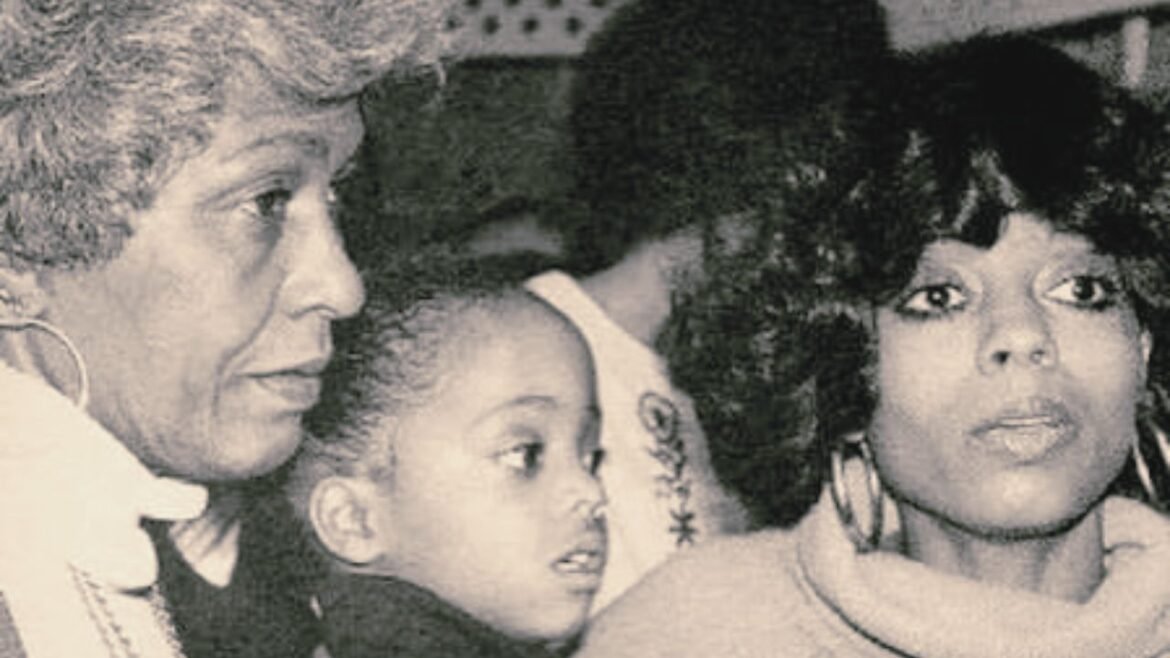
Most people know Diana Ross as one of the most celebrated performers in American music history. But far less is known about the woman who raised her — Ernestine Moten.
Ernestine was not a public figure in her own right. She didn’t record songs or appear on stage. Her story is told primarily through family history, biographical records, and genealogy research. Still, understanding who she was helps paint a fuller picture of where Diana Ross came from.
This article covers what is documented about Ernestine Moten — her birth, her Alabama roots, her move to Detroit, her marriage, and her place in the Ross family story.
Who Was Ernestine Moten?
Ernestine Moten was the mother of Diana Ross, the singer and entertainer known worldwide for her work with the Supremes and her long solo career.
Diana was born Diana Ernestine Ross in Detroit in 1944. Her middle name, Ernestine, reflects her mother’s first name — a small but meaningful detail that connects the two women.
Ernestine herself lived a private life. She was not a celebrity, a performer, or a public figure. Most of what is known about her comes from family biographies, genealogy records, and biographical accounts of Diana Ross’s early years.
It’s also worth noting that her name appears in different forms across historical records. You may see her listed as Ernestine Moten Ross or with spelling variations like Ernasteen. This kind of variation is common in older documents, particularly for Black Americans whose records were often recorded inconsistently during the early twentieth century.
Her Alabama Roots and Family Origins
According to genealogy sources, Ernestine Moten was born on January 27, 1916, in Allenville, Hale County, Alabama. This date is drawn from genealogy reporting rather than an independently verified official record, so it should be understood as reported rather than confirmed.
Her parents were William Moten and Isabella Moten, also recorded in some sources as Isabelle or Bell Moten. William Moten was documented as both a farmer and a preacher — a combination that was fairly common in rural Southern communities at the time.
Ernestine was reportedly the youngest of twelve children in the Moten household. Growing up in a large, rural Alabama family in the early 1900s meant a way of life shaped by farming, community, and faith. Resources were often limited, and families relied on each other heavily.
This background — Southern, rural, rooted in hard work and religious life — forms the foundation of who Ernestine was before she ever left Alabama.
The Move From Alabama to Detroit
In 1936, Ernestine Moten left Alabama and made her way to Detroit. She didn’t make the trip alone. According to biographical accounts, she moved with her sister Virginia Beatrice, who would later become known to the Ross family simply as “Aunt Bea.”
This migration was part of a much larger pattern in American history. During the early and mid-twentieth century, hundreds of thousands of Black families moved from the rural South to Northern cities like Detroit, Chicago, and Cleveland. They were seeking better wages, factory work, and distance from the racial violence and economic limitations of the Jim Crow South.
Detroit in particular was a draw because of its auto industry and factory jobs. It offered something Alabama’s farming economy couldn’t — steady urban employment and a larger community of Black residents building new lives.
Ernestine’s move to Detroit didn’t make her famous. But it did place her in the city that would eventually become the birthplace of Motown and the setting for Diana Ross’s entire childhood. That geographic decision shaped the next generation of her family in ways she likely couldn’t have anticipated.
Marriage, Children, and the Ross Family Household
After arriving in Detroit, Ernestine met Fred Ross Sr. The two married in the late 1930s, according to biographical material, and built a family together in the city.
Their children included several who would go on to become recognizable names in their own right. The family included Barbara Jean Ross, who later became known as Barbara Ross-Lee — a physician who made history as the first African American woman to lead an American medical school. Then came Diana Ross, followed by Rita, Fred Jr., and Arthur Ross, also known as “T-Boy.”
It’s worth noting that sources don’t always agree on the full list of the Ross children or the precise birth order. Rather than present one version as definitive, it’s more accurate to say the family had several children, with the names above appearing consistently across multiple biographical accounts.
Ernestine’s sister Virginia — Aunt Bea — lived with the family and helped care for the children. This kind of extended-family support was common in large urban households during that era, especially when both parents were working or when household demands were high.
Diana Ross grew up in this household — a large, close-knit, Baptist family in Detroit. The family’s faith and community ties were a real part of daily life, not just a background detail.
Barbara Ross-Lee and Family Caregiving
Encyclopedia.com’s biography of Barbara Ross-Lee notes that as the eldest child, Barbara took on caregiving responsibilities for her younger siblings during times when Ernestine was ill. This detail comes through in biographical records, though it shouldn’t be read as a full account of Ernestine’s health or character.
What it does show is that the Ross household, like many large families of that era, depended on everyone pulling together — including the children.
What Happened to Ernestine Moten?
According to genealogy and timeline sources, Ernestine Moten died in October 1984. One source places the date specifically at October 9, 1984, though again, this should be understood as reported rather than verified through official records.
She would have been in her late sixties at the time of her death, having lived long enough to see Diana Ross become one of the most recognized performers in American entertainment history.
There is no widely documented public record of Ernestine speaking about her daughter’s fame or her own role in the family’s story. Her life, as far as the available record shows, was lived privately — as a wife, a mother, and a woman who traveled a long road from rural Alabama to Detroit.
Ernestine Moten’s Place in the Ross Family Story
Ernestine Moten is not a household name. If you search for her, you’re almost certainly doing so because of her daughter. That’s a fair starting point — but it doesn’t make her story any less worth knowing.
She was part of the Great Migration, the massive movement of Black Americans from South to North that reshaped American cities in the twentieth century. She raised a family in Detroit that produced one of the most successful recording artists of all time, a pioneering physician, and a musician in Arthur “T-Boy” Ross. She kept her household together with help from her sister and her oldest children. She carried a name — Ernestine — that her famous daughter wore as a middle name throughout her entire life and career.
Those aren’t small things. They’re the quiet, foundational details that tend to get overlooked when the spotlight falls on someone else.
For readers interested in learning more about the lives behind the celebrities they admire, resources like Open Business Point offer profiles and background reads on figures connected to business, culture, and public life.
In Closing
Ernestine Moten was Diana Ross’s mother. She was born in Alabama in 1916, raised in a large farming family, and made her way to Detroit as a young woman in 1936. She married Fred Ross Sr., raised several children, and died in 1984.
Her life didn’t generate headlines. But it produced one of the most enduring voices in American music, and it shaped a family whose influence stretched from Detroit’s neighborhoods to national stages.
That’s a story worth knowing, even if it lives mostly in genealogy records and the margins of celebrity biography.
Read Also: