


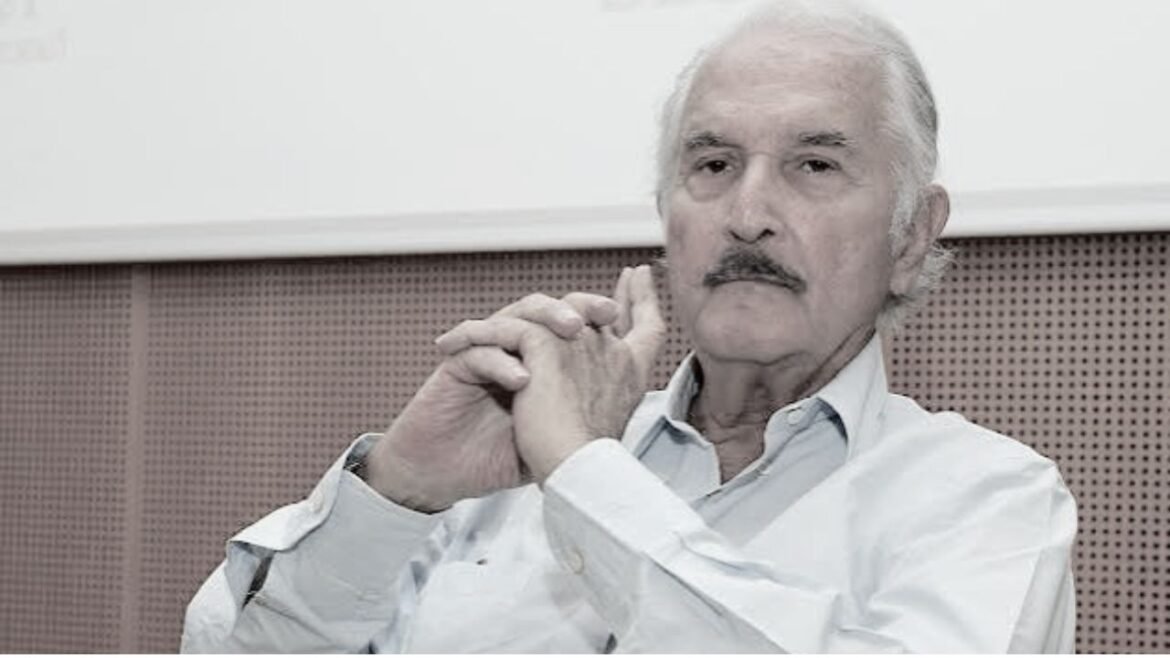
If you search “Carlos Fuentes” in a genealogy database, you will likely get dozens of results. The name is common enough in Spanish-speaking countries that unrelated records pile up quickly. But one person with that name stands clearly above the rest: Carlos Fuentes Macías, one of the most significant literary figures Latin America produced in the twentieth century.
This article covers his confirmed identity, family background, parents, marriages, children, literary career, and death. It also offers practical guidance for anyone trying to figure out whether a genealogy record refers to the famous Carlos Fuentes or someone else entirely.
Who Was Carlos Fuentes?
His full legal name was Carlos Fuentes Macías. He was publicly known simply as Carlos Fuentes. He worked across several forms of writing — novels, essays, short stories, plays, and literary criticism — and also served as a diplomat representing Mexico abroad.
He was born on November 11, 1928, in Panama City, Panama. That birthplace sometimes causes confusion. Fuentes was not Panamanian. His parents were Mexican citizens, and he is consistently identified by major reference institutions, including Encyclopaedia Britannica and the Library of Congress, as a Mexican writer.
It is also worth being clear about what he was not. He was not an athlete, a contemporary musician, or a social media personality. Any genealogy result or profile using that name and describing a very different occupation or birth date is almost certainly a different person.
His Parents and the Diplomatic Family That Shaped Him
Carlos Fuentes was born into a family shaped by international service. His father, Rafael Fuentes, was a Mexican career diplomat. His mother was Berta Macías Rivas. Both are named in reliable biographical sources, including the Irish Times and Encyclopaedia Britannica.
Because his father worked for the Mexican diplomatic service, the family moved frequently throughout his childhood. Fuentes spent time in Peru, Uruguay, Brazil, Chile, Argentina, and the United States before eventually settling back in Mexico. He was around 16 years old when the family returned.
This constant movement was not unusual or troubled — it was simply the nature of diplomatic life. Secondary sources are consistent on this point. His international childhood gave him fluency in multiple languages and exposure to a wide range of political and cultural environments. That experience later fed directly into his writing.
He studied law in Mexico and later studied international relations in Geneva, which added another layer to his already international profile.
Marriages and Personal Life
Fuentes was married twice. His first marriage was to Rita Macedo, a well-known Mexican actress. The relationship began in the late 1950s and eventually ended in divorce. Secondary sources differ slightly on exact dates, so it is more accurate to say the marriage took place in that general period rather than pinning it to a specific year that might conflict with another source.
His second marriage was to Silvia Lemus, a journalist and television figure. Fuentes and Lemus remained together until his death in 2012. She is the spouse most commonly mentioned in his later biographical coverage.
These two marriages are well-documented in multiple sources, including EBSCO Research Starters and the Irish Times. They are also useful reference points when trying to confirm whether a genealogy record refers to the author.
His Three Children
Carlos Fuentes had three children across his two marriages. Knowing their names is one of the most reliable ways to confirm whether a genealogy record is referring to the author.
- Cecilia Fuentes Macedo — his daughter with Rita Macedo.
- Carlos Fuentes Lemus — his son with Silvia Lemus.
- Natasha Fuentes Lemus — his daughter with Silvia Lemus.
Notably, both Carlos Fuentes Lemus and Natasha Fuentes Lemus died before their father. This is confirmed in biographical reporting, including coverage in the Irish Times. It is a sad but documented part of his personal history.
If a genealogy record lists these three names as children of a Carlos Fuentes born in Panama City in 1928, that is a strong indicator you are looking at a record connected to the author. These specific names together are not something you would find duplicated among private individuals sharing the same common name.
His Literary Career and Place in Latin American Literature
Fuentes began publishing in the early 1950s. His first major short-story collection, Los días enmascarados, appeared in 1954. It marked the beginning of a career that would eventually span roughly 50 books, according to the Library of Congress.
His most recognized works include The Death of Artemio Cruz, Aura, and Terra Nostra. These novels drew heavily on Mexican history, class structure, political power, and the long shadow of the Mexican Revolution. His writing was rarely simple in its themes, but it was always rooted in a deep engagement with what Mexico was and what it had been.
Fuentes was a central figure in the Latin American literary “Boom” of the 1960s and 1970s. This was a period when writers from across the region — including Gabriel García Márquez, Mario Vargas Llosa, and Julio Cortázar — gained serious international attention. Fuentes was part of that wave, and his work helped define how Latin American fiction was read and discussed in Europe and North America.
He also continued working as a critic, essayist, and public intellectual throughout his life. His output was consistent across decades, and he remained a visible presence in literary and political conversation until late in his life.
Death and Legacy
Carlos Fuentes died on May 15, 2012, in Mexico City. He was 83 years old. His death was widely covered in international press, and tributes came from writers, politicians, and cultural institutions around the world.
He left behind a body of work that remains in print and in university curricula across multiple countries. His influence on Mexican literature and on Latin American fiction more broadly is considered significant and lasting.
How to Use This Information in Genealogy Research
If you encounter a record named Carlos Fuentes in a database like MyHeritage, it is important not to assume it refers to the novelist. The name is genuinely common, and genealogy platforms often aggregate user-submitted family trees alongside historical records. User-created trees can contain errors, duplications, or entries copied from other sources without verification.
To confirm whether a record refers to the author, look for these specific matching details:
- Full name: Carlos Fuentes Macías
- Birth date: November 11, 1928
- Birthplace: Panama City, Panama
- Parents: Rafael Fuentes and Berta Macías Rivas
- Spouses: Rita Macedo and later Silvia Lemus
- Children: Cecilia Fuentes Macedo, Carlos Fuentes Lemus, Natasha Fuentes Lemus
- Occupation: writer, novelist, diplomat
- Death: May 15, 2012, Mexico City
Think of the name “Carlos Fuentes” the way you might think of a common book title. The title alone tells you very little. You need the publication date, the author, and the subject to know which book you are actually looking at. The same logic applies here. Birth date, birthplace, parents, and family members are the details that distinguish the right record from dozens of unrelated ones.
If you are doing broader research on public figures and their family connections, resources like OpenBusinessPoint can help you find additional context and background information across a range of topics.
Final Thoughts
Carlos Fuentes Macías was a Mexican novelist, essayist, diplomat, and one of the most recognized writers to come out of Latin America in the twentieth century. He was born in Panama to Mexican diplomatic parents, raised across multiple countries, and spent his adult life writing about Mexico with depth and seriousness.
His family story — a diplomat father, an actress as his first wife, a journalist as his second, and three children, two of whom died before him — is well-documented and specific enough to serve as a reliable identification tool in genealogy research.
If a record matches all of those details, you are almost certainly looking at the right person. If it does not, you are likely looking at one of the many other people who happen to share a very common name.
Read Also: