


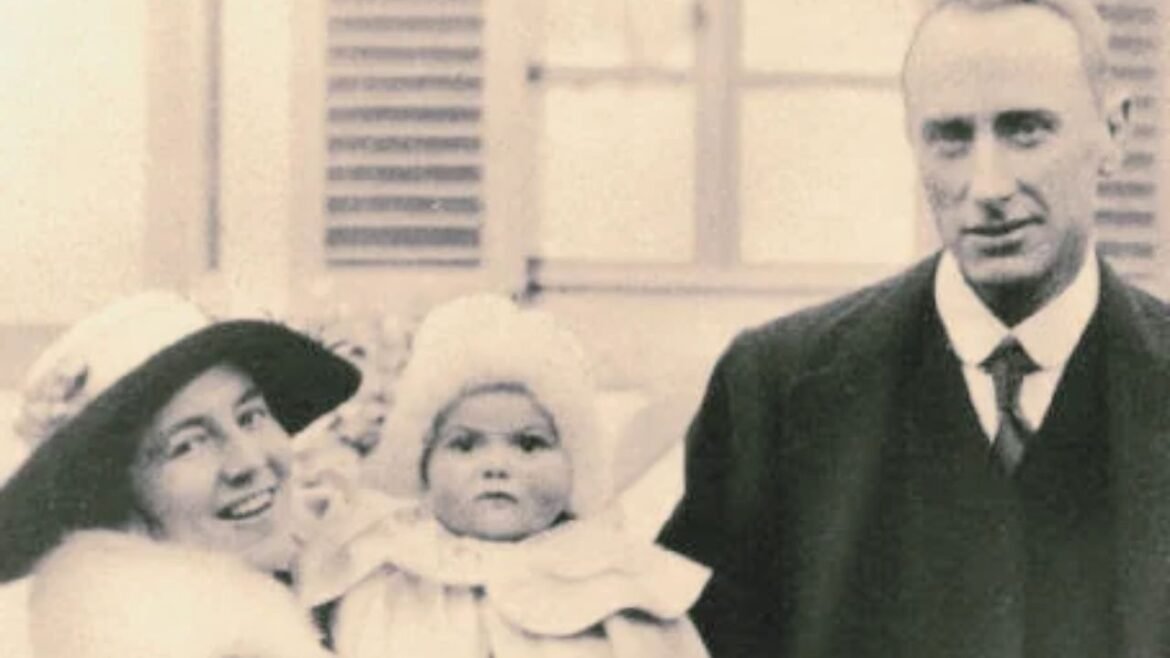
Most people recognize Olivia de Havilland and Joan Fontaine from classic Hollywood films and Oscar history. Both sisters became major stars. Both won Academy Awards. But fewer people know the man who fathered them both — Walter Augustus de Havilland.
Walter was not a celebrity. He was not an aviation pioneer. He was a British academic and patent attorney who spent much of his professional life in Japan. His name surfaces today mainly through his family connections — and those connections are genuinely remarkable.
Who Was Walter De Havilland?
Walter Augustus de Havilland was born in 1872 and died in 1968, according to genealogy records and family summaries. That lifespan of nearly a century covered an enormous amount of history — from the Victorian era through the early Space Age.
He was British by background and built his career largely as a teacher and patent attorney in Japan. He had no known role in Hollywood, aircraft design, or entertainment. His public significance today comes from his family — specifically, from two daughters who became famous on their own terms, and from a half-brother who changed the history of aviation.
Family Origins and Early Life
Walter came from a well-established family with deep roots in Guernsey, one of the Channel Islands situated between England and France. The de Havilland family had an Anglo-Norman background and had been a landed family in Guernsey for generations.
His father was Reverend Charles Richard de Havilland, and his mother was Margaret Letitia Molesworth. That background — a clergyman father, a Guernsey family with Anglo-Norman heritage — gave Walter a foundation in education and professional respectability.
He attended Elizabeth College in Guernsey, a well-regarded school with a long history. He later studied at Cambridge University and graduated with a Bachelor of Arts degree in 1893. For his era, that was a strong educational foundation, and it set him up for a career that would eventually take him far from the Channel Islands.
His Career in Japan
Walter spent a significant portion of his adult life in Japan. He worked as a teacher and academic there, with sources connecting him to teaching in Kobe and to the Imperial University in Tokyo. At some point, he transitioned into patent law, working as a practicing patent attorney.
This is worth noting because it shows Walter had a genuine professional identity of his own. He was not simply famous by association. He built a career in a foreign country during a period when doing so required real determination and adaptability.
One small but interesting personal detail: sources note that Walter had an interest in Go, the ancient board game that is deeply rooted in East Asian culture. It is a minor footnote, but it hints at a man who engaged seriously with the country where he had chosen to live and work.
His Marriage and Two Daughters
Walter married Lilian Augusta Ruse in 1914. Lilian would later become publicly known as the mother of two of Hollywood’s most celebrated actresses. She also pursued acting herself, working under the stage name Lilian Fontaine — though she should not be confused with other people who carried that surname professionally.
Walter and Lilian had two daughters, both born in Japan:
- Olivia Mary de Havilland, born in 1916, died in 2020. She became one of Hollywood’s leading stars, known for roles in classic films including Gone with the Wind and The Heiress. She won the Academy Award for Best Actress twice, in 1946 and 1949. She also successfully challenged the studio contract system in a legal case that changed the industry.
- Joan de Beauvoir de Havilland, born in 1917, died in 2013. She became known professionally as Joan Fontaine. She won the Academy Award for Best Actress in 1942 for her role in Suspicion. Readers searching for her may find her listed under either her birth name or her stage name — both refer to the same person.
Both daughters were born in Japan before the family eventually relocated. Their mother, Lilian, later moved to California, where she raised the girls after her marriage to Walter ended. Walter and Lilian separated, and the daughters grew up largely in the United States.
It is worth being clear about one thing: the available record supports the fact of the family relationship. There is no strong basis for attributing Walter’s influence to the specific shape of either daughter’s career. Olivia and Joan built their professional lives on their own talent and choices.
The two sisters became famous separately — and they also became famous for a reported long-running estrangement from each other. That story has been covered extensively in the media over the decades. But it belongs to Olivia and Joan’s story, not primarily to Walter’s.
Walter’s Connection to Sir Geoffrey De Havilland
The de Havilland name carries weight in two very different worlds: Hollywood and aviation. That is because Walter was the half-brother of Sir Geoffrey de Havilland, one of Britain’s most important aviation pioneers.
Geoffrey de Havilland founded the de Havilland aircraft company and played a central role in the development of British aviation. He was a designer, a manufacturer, and a test pilot. His company produced aircraft that became significant in both civilian and military history. Geoffrey was eventually knighted for his contributions to aviation.
The “half-brother” distinction matters here. Walter and Geoffrey shared a familial connection, but they were not full brothers. This detail is part of the actual family structure and should not be simplified away.
Because Walter was Geoffrey’s half-brother, Olivia de Havilland and Joan Fontaine were first cousins of Geoffrey’s children. That means the same family tree branches into both Golden Age Hollywood and British aviation history — an unusual combination by any measure.
To be clear: Walter had no known involvement in aircraft design, the de Havilland company, or aviation in any form. That work belonged entirely to Geoffrey. Walter’s career was in education and patent law in Japan.
For anyone researching celebrity genealogy or British family history, resources like OpenBusinessPoint can offer useful context for understanding how family backgrounds connect to larger cultural and historical stories.
Why Walter De Havilland Still Comes Up Today?
Walter de Havilland was not a public figure in the conventional sense. He did not seek the spotlight, and there is no substantial body of biographical material about his private views or personal life. What the record does show is a man who came from a distinguished family, built an independent professional career in Japan, and fathered two of the most acclaimed actresses in Hollywood history.
His name appears today largely in genealogy databases and family history research. Sites like Geni and MyHeritage have made it easier to trace these connections, though it is always worth comparing those records with other sources where possible. Genealogy profiles are useful starting points, not always definitive proof.
What makes Walter genuinely interesting — even without celebrity status of his own — is the family he belonged to. On one side: two Oscar-winning daughters who defined classic Hollywood. On the other: a half-brother who helped define modern aviation. Walter stood at the center of that family tree, quietly, without claiming any of that fame for himself.
A Brief Summary
Walter Augustus de Havilland was born in 1872 in a family with Anglo-Norman roots in Guernsey. He studied at Cambridge, built a career as a teacher and patent attorney in Japan, and married Lilian Augusta Ruse in 1914. Their two daughters — Olivia de Havilland and Joan Fontaine — went on to win Academy Awards and become permanent figures in film history.
Walter was also the half-brother of Sir Geoffrey de Havilland, the aviation pioneer who founded the de Havilland aircraft company. Walter himself had no connection to aircraft or aviation.
He died in 1968 at the age of approximately 96. He was not famous. But the family he was part of left a lasting mark on both cinema and aviation — and that is reason enough to know his name.
Read Also: