


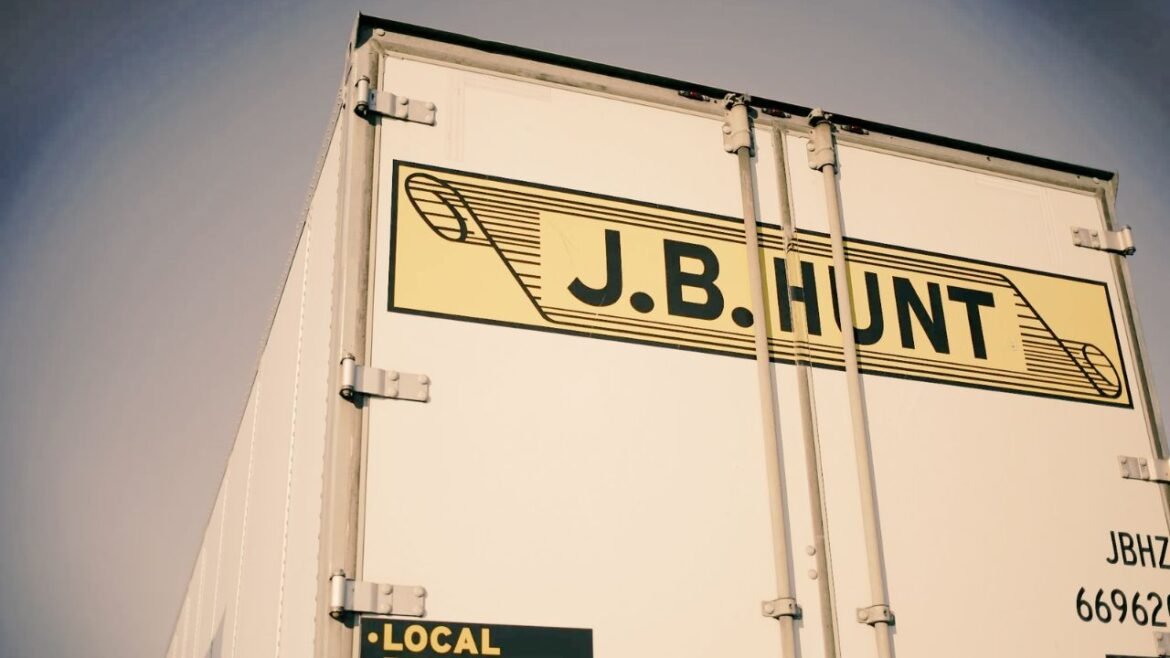
A facility closure in Georgia made headlines recently, and some people took it as a sign that J.B. Hunt was shutting down entirely. That’s a reasonable reaction if you only saw a snippet on social media. But closing one location is not the same as closing a company, and the facts here tell a very different story.
This article breaks down who J.B. Hunt is, what actually happened in Georgia, how the company’s finances look right now, and how to evaluate these kinds of rumors about any large carrier.
What J.B. Hunt Is and How Big It Actually Is
J.B. Hunt Transport Services is one of the largest transportation and logistics companies in the United States. It was founded in 1961, is headquartered in Lowell, Arkansas, and trades publicly on the stock market. It operates across multiple segments — intermodal, dedicated contract services, truckload, and others.
In 2024, the company reported approximately $12.9 billion in full-year revenue and around $831 million in operating income. Yes, both numbers were down year-over-year — revenue dropped about 6% and operating income fell about 16%. But this is still a massive, profitable company by any reasonable measure.
That scale matters when evaluating closure news. A company with nearly $13 billion in annual revenue and hundreds of terminals across the country is not the same as a small regional carrier that could fold after losing one contract.
The Georgia Facility Closure — What Actually Happened
J.B. Hunt closed its facility at 100 Stonecrest Industrial Way in Lithonia, Georgia, on October 27, 2025. The location was tied to a Home Depot distribution operation. This is the event that likely triggered the wave of online searches asking whether J.B. Hunt was going out of business.
Before the closure, J.B. Hunt filed a WARN notice on August 26. WARN stands for Worker Adjustment and Retraining Notification — it’s a federal law that requires employers to give advance notice before large layoffs or plant closings. The filing is public record, which is how these closures surface online and sometimes get misread as signs of a total company shutdown.
The closure affected 74 employees — drivers, managers, and dispatchers. The company described the reason as “changing business conditions.” It’s also part of a broader effort to cut $100 million in costs and improve efficiency during a difficult stretch for the freight industry.
One Facility Closing Is Not the Same as a Company Closing
This is the core misunderstanding worth clearing up directly.
Think about a national retail chain. If one location in a mid-size city closes, it doesn’t mean the brand is shutting down. Customers in that area find another store or shop online. The employees at that location lose their jobs. But the company keeps running everywhere else.
The same logic applies here. Freight that was previously handled out of the Lithonia, Georgia facility gets rerouted to another J.B. Hunt terminal or shifted to a different mode — like intermodal. There may be some short-term disruption for shippers in that area, but J.B. Hunt as a network still exists and still operates.
For drivers and job seekers in the Atlanta region, the local opportunity disappears. That’s a real and legitimate impact. But J.B. Hunt has openings in other regions and segments, so it’s worth checking the company’s job listings if you’re looking for work with them.
Large carriers close specific terminals or exit certain contracts on a regular basis — especially when freight markets are weak. It’s a routine business adjustment, not a sign that a company is exiting the industry.
For comparison, here are two companies that actually did go out of business recently: 10 Roads Express announced the closure of all its mail transport operations by the end of January 2026, and Standard Forwarding Freight announced a full closure and employee terminations on December 29, 2025. Those are companies that actually ceased operations. J.B. Hunt closing one facility in Georgia is not in that category.
How J.B. Hunt’s Finances Look Right Now
The financial picture shows pressure, but not collapse.
Full-year 2024 revenue came in around $12.9 billion, down about 6% from the prior year. Operating income was approximately $831 million, down about 16% for the year. Those declines are real and shouldn’t be dismissed.
But look at the direction of travel. In Q4 2024, operating income was actually up 2% and diluted earnings per share were up 4%. That’s a stabilization signal, not a freefall. In another reporting period, the company posted 27% earnings growth, driven by stronger performance in intermodal and dedicated freight, with customers signing longer-term contracts.
There’s an important distinction between a company facing a rough cycle and a company heading toward bankruptcy. Right now, J.B. Hunt fits the first description. The freight market has been difficult for a while — analysts have used terms like “Great Freight Recession” to describe conditions across the industry. Many smaller carriers have not survived it. Dozens of trucking and logistics firms filed for bankruptcy or shut down in 2025.
J.B. Hunt is managing through that same environment by cutting costs, closing underperforming locations, and focusing on segments where it’s doing better. That’s what large companies do when markets get tough — they adjust. They don’t just close overnight.
What This Means If You’re a Shipper, Driver, or Investor
If You’re a Shipper or Customer
Your freight relationship with J.B. Hunt is not going away because of one facility closure. Loads previously handled out of Lithonia may be reassigned to another terminal or handled through intermodal instead. You may want to check with your J.B. Hunt rep if you have activity in that corridor, but there’s no reason to assume the company won’t be able to serve you.
If You’re a Driver or Job Seeker
The 74 jobs at the Lithonia facility are gone. If you were counting on that location, that’s a genuine problem and worth taking seriously. But J.B. Hunt operates across the country, and the company may have positions open in other areas or segments. It’s worth checking directly rather than assuming the whole company is done.
If You’re an Investor
Revenue and margin pressure are real. A 6% drop in revenue and a 16% drop in operating income are not small numbers. But the company still generates billions in revenue, is still profitable, and is showing early signs of stabilization in some segments. The risk here is cyclical — tied to freight market conditions — not existential. That’s a meaningful difference when evaluating a stock.
For deeper context on how large logistics companies navigate downturns like this, Open Business Point covers business strategy and industry news in plain language.
How to Fact-Check “Going Out of Business” Rumors
J.B. Hunt is a useful case study for how localized bad news can create misleading impressions about an entire company. A WARN notice gets filed, someone posts about it, and suddenly people are searching whether the whole company is shutting down.
Here’s a simple checklist you can use for any large public company:
- Check for bankruptcy filings. Bankruptcies are public. If a company files, it shows up quickly in SEC records and news coverage.
- Look at earnings releases. Public companies report quarterly. If a company is still reporting earnings, it’s still operating.
- Read the WARN notice in context. A WARN notice means a specific location is closing, not the entire company.
- Look for network-wide shutdowns. One facility closing is different from a company announcing it’s shutting down all operations across every location.
- Check analyst commentary. Wall Street analysts cover large public companies closely. If J.B. Hunt were genuinely at risk of collapse, that would show up in their reports.
None of the signals that would indicate a real company-wide shutdown are present with J.B. Hunt right now. No bankruptcy filing, no national network closure, no corporate dissolution announcement.
The Bottom Line
J.B. Hunt is not going out of business. It closed a facility in Lithonia, Georgia, affecting 74 workers, as part of a cost-cutting effort during a tough freight market. That’s a real impact for the people involved, and it’s worth understanding clearly. But it has nothing to do with the entire company shutting down.
As of the most recent publicly available information, J.B. Hunt remains a functioning, profitable, publicly traded transportation company — one that’s navigating a difficult period in the freight industry, not exiting it. Freight markets are cyclical, so conditions can shift. If you’re reading this well after it was written, check the company’s latest earnings release or SEC filings for the most current picture.
The lesson here isn’t specific to J.B. Hunt. Whenever you see a headline about a major company “shutting down,” slow down before assuming the worst. One facility closing is not the same story as a company disappearing.
Also Read:
- Is Dollar General Going Out Of Business?
- Is Hydrow Going Out of Business?
- Is Justice Going Out of Business?