


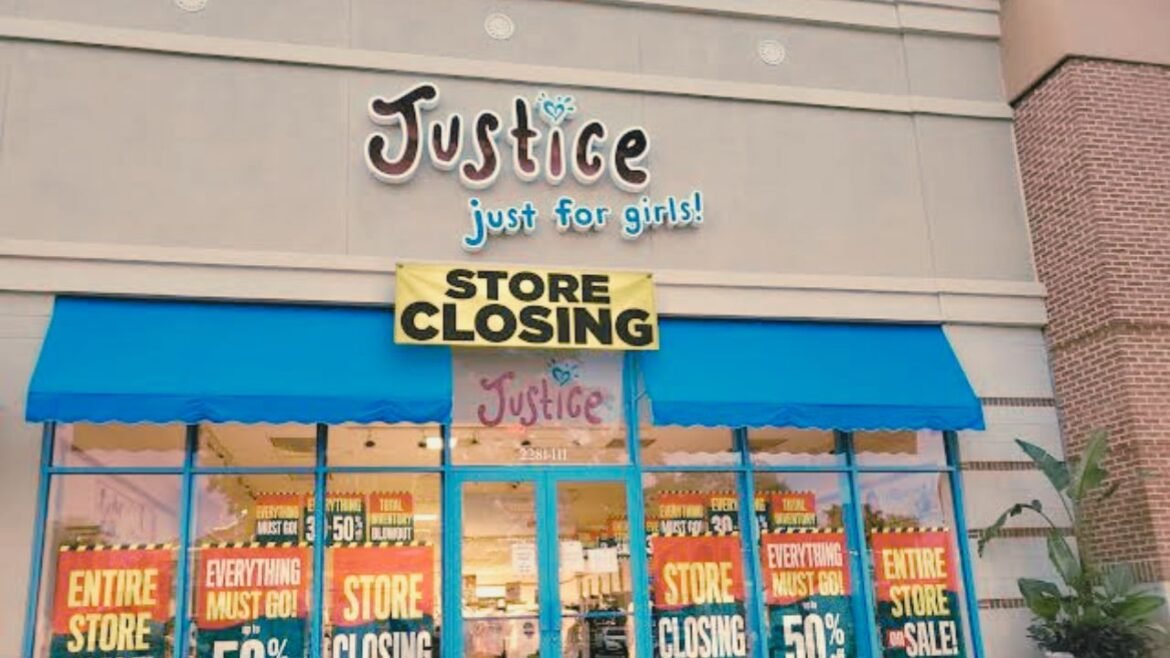
If you drove to your local mall looking for a Justice store around 2021, you probably found an empty storefront. Maybe a paper sign in the window, some bare shelves still visible inside. It felt like the end.
But here’s the thing — Justice didn’t entirely disappear. The stores are gone, but the brand is still alive. What happened between those two facts is actually a useful business story worth understanding.
This article breaks down why Justice stores closed, how the bankruptcy played out, who owns the brand now, and where you can actually buy Justice products today.
What Justice Was and How It Grew
Justice started as Limited Too before rebranding. It targeted girls roughly ages 6 to 12 with affordable, trend-driven clothing — think bright colors, glitter, and styles that appealed directly to tweens rather than their parents.
At its peak, Justice operated hundreds of mall-based stores across the U.S., Canada, and Puerto Rico. It was a go-to destination for a specific demographic, and it had real brand loyalty among its core customers.
Justice was part of Ascena Retail Group, a larger parent company that also owned Ann Taylor, Loft, Catherines, and other brands. Across all its brands, Ascena ran roughly 2,800 stores. That’s a massive footprint — and a massive set of fixed costs tied almost entirely to mall-based retail.
Why Justice Stores Closed
The easy answer is Covid-19. But that’s only part of the story.
Ascena had already built up serious debt through years of expansion before the pandemic hit. Running 2,800 stores is expensive, and mall traffic had been declining for years. Fewer people walking past your storefront means fewer people walking in. For a retailer that depended almost entirely on mall locations, that trend was a slow-moving problem long before 2020.
When Covid-19 arrived, it didn’t cause the collapse on its own — it hit a company that was already financially stretched. Ascena filed for Chapter 11 bankruptcy in July 2020.
The initial plan was to close around 600 of Justice’s 826 stores and shift what remained toward an online-focused model. The goal was to cut Ascena’s total store count from roughly 2,800 down to about 1,200 across all its brands. Justice took the heaviest cuts.
The Store Closures and What “Going Out of Business” Actually Looked Like
Once the closures were announced, things moved quickly. Justice locations began holding liquidation sales with discounts up to 50 percent. SB360, a liquidation firm, handled the process.
Many stores had roughly 30 to 60 days from announcement to final closing. State-level closures were documented across New Jersey, Pennsylvania, Texas, California, and other markets. In Pennsylvania alone, 35 locations closed.
As the bankruptcy proceedings continued, Ascena added roughly 23 more closures beyond the original 600. Then came the bigger news: Ascena announced that all remaining Justice stores would close, not just the first wave.
Most stores stayed open through the 2020 holiday season — likely to capture that revenue before shutting down for good. By early 2021, every Justice store had closed. The physical chain was done.
The Brand Did Not Die — It Was Sold
This is the part that matters most, and it’s where a lot of people get confused.
Justice the store chain went out of business. Justice the brand did not.
During the bankruptcy process, Bluestar Alliance LLC purchased Justice’s intellectual property — the trademarks, brand name, and associated rights — for approximately $90 million at a bankruptcy auction. The court approved the transaction in November 2020.
Bluestar Alliance then relaunched Justice as an online retailer through Shopjustice.com. The stores were gone, but the brand had a new owner and a new strategy.
Think of it this way: imagine a restaurant chain closes every single location, but someone buys the recipes and brand name and starts selling the same food as a product line through grocery stores. The restaurants are out of business. The brand is not. That’s essentially what happened with Justice.
This distinction — between a store chain failing and a brand surviving — is actually common in modern retail. Brand names carry real value even when the physical stores stop making sense. A recognizable name with an existing customer base is worth paying for, even in bankruptcy.
Where Justice Products Are Sold Today
If you want to buy Justice clothing right now, you won’t find a standalone Justice store. But you’re not out of options.
Justice products are sold through Walmart — both in physical stores and on Walmart.com. The brand operates as a licensed label distributed through Walmart’s retail infrastructure rather than running its own locations.
This is a fundamentally different business model than what Ascena ran. Before, Justice owned and operated hundreds of stores. That meant paying rent across hundreds of mall locations, managing store staff, handling fixtures and buildouts, and carrying all the costs that come with running retail real estate.
Under Bluestar Alliance, the model is much leaner. Bluestar focuses on the brand itself — the designs, the marketing, the licensing — while Walmart handles the stores and logistics. It’s what people in business call an asset-light model. Less overhead, fewer fixed costs, and distribution through a retailer that already has the scale and the customer traffic.
For parents shopping for their kids, the practical takeaway is simple: look for Justice on Walmart.com or in Walmart’s clothing section. The brand exists; it just lives somewhere new.
What This Case Teaches About Brand Survival After Bankruptcy
Justice’s story isn’t unique. It fits a broader pattern in retail where brands outlive their stores.
The core lesson is that brand equity — the recognition and loyalty a name carries — can hold real monetary value even when the underlying business model fails. Bluestar Alliance paid $90 million for Justice’s name because there’s genuine consumer recognition there. Tweens and their parents knew the brand. That familiarity was worth buying.
For business owners and managers, there are a few practical takeaways from this case:
- Over-expansion creates fragility. Ascena’s 2,800-store footprint looked like strength. In reality, it was a liability — too much fixed cost, too dependent on one channel. When mall traffic declined and a crisis hit, there was no flexibility.
- Single-channel dependence is a real risk. Justice’s stores lived or died by mall foot traffic. Retailers that hadn’t diversified their distribution channels had nowhere to go when that traffic dried up.
- Brand value can survive business failure. Even after bankruptcy, Justice’s trademark was worth $90 million to the right buyer. For entrepreneurs building brands, this is a reminder that the name and reputation you build have their own value — separate from the specific business structure around them.
- Asset-light models offer resilience. The new Justice doesn’t own store space. That’s intentional. Licensing through an established retailer like Walmart shifts the risk and lowers the cost base significantly.
If you’re a business owner or manager thinking through your own channel strategy, Justice is a useful case study in what happens when growth outpaces financial stability. For more practical business analysis and case studies, Open Business Point covers these topics in a straightforward way.
So Is Justice Out of Business?
The honest answer is: it depends on what you mean.
If you mean the mall stores — yes. Every Justice retail location closed by early 2021. Those are gone and won’t be coming back in their original form.
If you mean the brand — no. Justice was sold, not buried. Bluestar Alliance acquired it, kept the name alive, and repositioned it as a product line sold primarily through Walmart.
For most people who grew up shopping there, walking into a Justice store is no longer possible. That chapter is closed. But the brand hasn’t disappeared — it just changed hands, changed its model, and moved into a different kind of retail entirely.
Whether that counts as “going out of business” depends on your definition. What’s clear is that a recognizable brand found a way to survive even after the business model that built it stopped working. In retail, that’s actually more common than most people realize.
Also Read:
- Is La-Z-Boy Going Out of Business
- Is Dollar General Going Out Of Business?
- Is Hydrow Going Out of Business?