


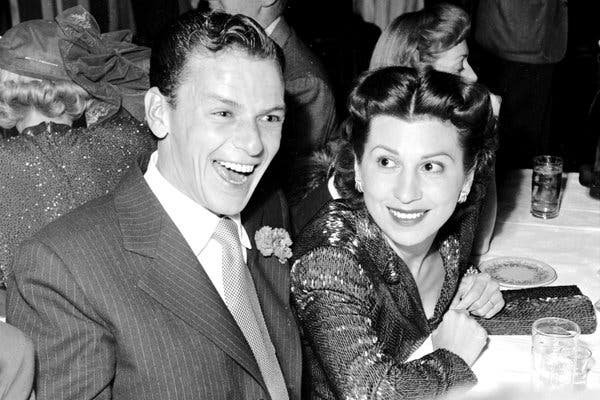
Most people know the name Frank Sinatra. Far fewer know the name Nancy Barbato — the woman who was there before the fame, before the films, and before the world knew who Frank Sinatra was. Nancy Barbato was his first wife and the mother of his three children. Her story is quiet compared to Sinatra’s, but it is deeply connected to one of the most well-known names in American entertainment history.
This article covers who Nancy Barbato was, how she met Sinatra, what their marriage and family life looked like, why the marriage ended, and how she lived in the decades that followed.
Who Nancy Barbato Was?
Nancy Barbato was born in New Jersey and later became publicly known as Nancy Barbato Sinatra after her marriage to Frank Sinatra. She was not a public entertainer or professional celebrity in her own right. She is known primarily through her family — and through her role as the first woman Frank Sinatra married.
One important point worth clarifying early: Nancy Barbato is often confused with her daughter, Nancy Sandra Sinatra, the singer and actress known for the hit song “These Boots Are Made for Walkin’.” They are two different people. Nancy Barbato was the mother. Nancy Sandra Sinatra was the daughter. Throughout this article, “Nancy Barbato” refers to the mother unless stated otherwise.
Nancy Barbato did not pursue a career in entertainment. Her public identity was shaped by her marriage, her three children, and her long connection to the Sinatra family long after the divorce.
How Nancy Barbato Met Frank Sinatra?
The two met in 1934 at the Jersey Shore. Long Branch, New Jersey is frequently cited as the location. At the time, Frank Sinatra was a young man with big ambitions but no real fame yet. He was still an aspiring performer trying to figure out his path in music.
Both Nancy and Frank came from modest, working-class New Jersey backgrounds. That shared foundation played a part in bringing them together. Their relationship developed over several years before they decided to marry.
It is worth noting that the exact details of how they first met vary slightly depending on the source. What is consistently supported across multiple accounts is the year — 1934 — and the general setting of the Jersey Shore. The picture that emerges is of two young people from similar circumstances, meeting well before anyone outside of New Jersey had any reason to know Frank Sinatra’s name.
Their Marriage and Family Life
Nancy Barbato and Frank Sinatra married on February 4, 1939, in Jersey City, New Jersey. It was the first marriage for both of them. The early years of their life together were far from the glamorous image that would later surround the Sinatra name. Frank was still working his way up, and the household reflected that reality.
They went on to have three children together:
- Nancy Sandra Sinatra — born in 1940, she later became a singer and actress with a successful career of her own.
- Frank Sinatra Jr. — born in 1944, he became a singer and conductor who remained closely tied to his father’s musical legacy throughout his life.
- Christina “Tina” Sinatra — born in 1948, she went on to work as an actress and producer.
The family had strong roots in New Jersey during the early years of the marriage. As Sinatra’s career began to grow and opportunities moved him toward Hollywood, the family eventually relocated to California. Nancy managed home life during a period when Sinatra was frequently traveling and performing, chasing a career that would eventually make him world-famous.
The domestic picture was not one of early wealth or ease. Nancy Barbato was raising a family while her husband was building something from the ground up. The version of Sinatra that the public came to know — the tuxedos, the Las Vegas residencies, the film roles — came much later.
The Separation and Divorce
The marriage did not last. The couple separated in September 1950, and their divorce was finalized in 1951. The marriage had lasted just over twelve years.
Sinatra’s relationship with actress Ava Gardner became a well-documented part of the public story surrounding the breakdown of the marriage. By the late 1940s and early 1950s, Sinatra’s celebrity had grown considerably, and so had the pressures that came with it. The Ava Gardner connection has been widely reported in sources including the New York Times and Encyclopaedia Britannica, so it is part of the confirmed public record around this period of his life.
It is important to be clear about one thing: Nancy Barbato was Frank Sinatra’s first wife, not his only one. Sinatra married three more times after the divorce. He wed Ava Gardner in 1951, Mia Farrow in 1966, and Barbara Marx in 1976. Nancy Barbato remained the first chapter — and in many ways, the most grounded one.
Nancy’s Life After the Divorce
After the divorce, Nancy Barbato did not remarry. According to biographical accounts, she remained single for the rest of her life. That is a notable detail given how long she lived and how much time passed after the marriage ended.
What is also notable is that she and Sinatra did not fully disappear from each other’s lives. Despite everything, the two reportedly maintained a close relationship for decades after the divorce. The New York Times, in its obituary for Nancy Barbato, described her as a lasting friend and quiet confidante to Sinatra — a connection that continued until his death in 1998.
That does not mean the relationship was without difficulty or complexity. Divorces rarely are, and Sinatra’s subsequent marriages and very public personal life would not have made things simple. But the general account from reliable sources points to a continuing bond rather than a complete break.
Nancy lived a life that was largely private. She was not a public figure in the way her ex-husband was, and she did not seek that kind of attention. Her identity in later years remained tied to the Sinatra family — as the mother of three notable children and as the woman who knew Sinatra before the rest of the world did.
For anyone interested in the full scope of Frank Sinatra’s personal history, Nancy Barbato represents an important piece. You can find broader context about public figures and their stories through resources like OpenBusinessPoint, which covers a range of topics across business and culture.
Her Death in 2018
Nancy Barbato Sinatra died in July 2018 at the age of 101. She had outlived Frank Sinatra by twenty years. The coverage of her death focused on her role as his first wife and as the mother of his children, because that was the story she was known for. She had not pursued fame on her own terms, and the reporting reflected that.
Living to 101 means she spent the vast majority of her life after the divorce — more than sixty years — as a private person, raising children who would go on to have public careers, and staying connected to a family that carried one of the most recognizable names in American entertainment.
Why Nancy Barbato Still Matters to the Sinatra Story?
Nancy Barbato represents something specific in the larger story of Frank Sinatra’s life. She knew him when he was nobody. She married him before the records, the films, the Rat Pack, and the fame. Their life together was built on a modest New Jersey foundation, not on celebrity.
Her three children — Nancy, Frank Jr., and Tina — all went on to have meaningful careers connected to their father’s world. In that way, Nancy Barbato’s role extended beyond the marriage itself. She raised the next generation of the Sinatra family.
The fact that she remained a quiet presence in Sinatra’s life long after the divorce also says something worth noting. Whatever complicated history existed between them, the connection did not disappear when the marriage ended. That is an unusual thing, especially given how dramatically Sinatra’s life changed after 1951.
Nancy Barbato was not a celebrity. She was not looking to be one. But her place in the Sinatra story is real, documented, and worth understanding clearly — especially for anyone trying to make sense of the man behind the music.
Read Also: