


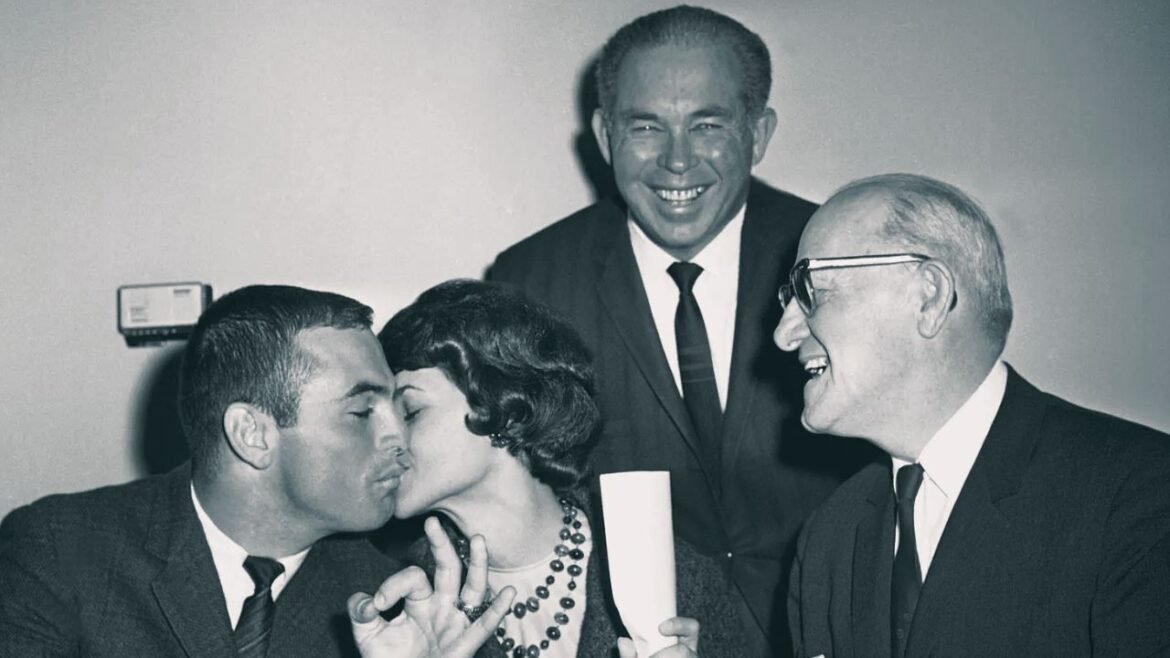
Most people who recognize the name Brian Piccolo know it from football history or the television film Brian’s Song. Far fewer know much about Joy Piccolo, the woman who was his wife, raised their three young daughters after his death, and has stayed connected to his legacy for more than five decades.
This article covers who Joy Piccolo is, her marriage to Brian, their family, what happened after Brian died in 1970, her remarriage, the name variations readers may encounter when searching for her, and her ongoing connection to Brian’s commemoration.
Who Joy Piccolo Is?
Joy Piccolo was Brian Piccolo’s wife and high-school sweetheart. She is not a celebrity or public figure in her own right. Her public profile exists almost entirely because of Brian’s story and the family legacy that followed his death.
Readers searching for her may come across several name variations. Joy Piccolo, Joy Piccolo O’Connell, and Joy Murrath all refer to the same person. Joy Murrath appears to reflect her birth or earlier family name. Joy Piccolo O’Connell reflects her later remarriage after Brian’s death. Knowing this is useful for anyone researching her through genealogy databases or historical records, where different name forms can appear without much context.
Brian Piccolo’s Career and What Made His Story Different
Brian Piccolo played running back for the Chicago Bears and wore jersey number 41. He was not primarily remembered as a dominant statistical performer. His wider recognition came from his character, his friendship with teammate Gale Sayers, and the way he faced a serious illness at a young age.
The friendship between Brian and Gale Sayers stood out at the time because it formed across racial lines in professional sports during the late 1960s. That was not common. The two men became close teammates and friends in an era when that kind of bond was not always visible or publicly celebrated in the NFL.
When Brian became seriously ill, Sayers gave an emotional public tribute that brought national attention to his story. That speech, along with the family drama behind it, became the basis for the television film Brian’s Song, which introduced Brian’s life to a much wider audience.
The Chicago Bears have continued honoring Brian’s memory long after his death. On the 52nd anniversary of his passing, the team held a formal commemoration that included Joy and her daughters. This shows that his legacy has remained meaningful to the organization for decades, not just as a historical footnote.
It is worth being clear here: Brian’s cultural legacy and his athletic record are two different things. He is not remembered as a Hall of Fame-level player based on his stats. He is remembered because of who he was and what happened to him and his family.
Joy and Brian’s Marriage and Their Three Daughters
Joy and Brian married before he joined the Chicago Bears, according to published biographical accounts. They had three daughters together: Lori, Traci, and Kristi.
When Brian died on June 16, 1970, at age 26, his daughters were very young. According to the Chicago Bears’ official account, the girls were approximately four, three, and one years old at the time of his death. That detail matters because it helps explain what Joy was actually facing as a widow. She was a young woman, suddenly alone, with three children all under the age of five.
The family situation behind the public story of Brian Piccolo was not an abstract tragedy. It was a household with small children, an absent father, and a mother who had to figure out how to move forward.
Life After Brian’s Death in 1970
Brian Piccolo died in New York on June 16, 1970, from cancer. He was 26 years old.
In the immediate aftermath, Joy considered leaving Chicago and relocating to Atlanta, according to a Chicago Sun-Times report. A neighbor named Pat Somers Cronin, a writer, encouraged Joy to stay in the Chicago area and helped reinforce the importance of preserving Brian’s legacy. That encouragement appears to have made a real difference in how Joy approached the years ahead.
Approximately three years after Brian’s death, Joy married Richard O’Connell. Together, they had two sons, Tom and Mike. That brought Joy’s total number of children to five.
A 2019 report from The Athletic, published through the New York Times, described Joy and Richard as living in Delavan, Wisconsin at that time. The same report noted that Joy was helping care for her mother, Grace Murrath, and that she had 12 grandchildren as of that reporting. These details should be understood as a snapshot from 2019 rather than a current description of her circumstances.
Joy’s Connection to Brian’s Legacy
Joy has been publicly associated with charitable efforts connected to Brian’s memory, including work tied to the Brian Piccolo Cancer Research Foundation. The foundation reflects a longstanding effort to channel Brian’s story into something useful beyond the sports world.
Joy and her daughters have also appeared at Chicago Bears commemorations over the years. The team’s 52nd anniversary tribute is one documented example of the family maintaining a visible connection to the organization. These appearances show that Joy’s role has not been passive. She has been part of keeping the memory alive in a public way.
It is worth noting that some websites describe Joy’s specific role within the foundation, including claims about her serving as president. Those claims should be treated carefully, as they are not all confirmed through official foundation records or major news sources. The confirmed picture is that she has been associated with charitable efforts in Brian’s name, but the precise nature of any organizational role is not fully documented in the most reliable public sources.
How Accurate Is Brian’s Song?
Many people encounter Joy Piccolo’s story through Brian’s Song, the 1971 television film about Brian and Gale Sayers. The film is a dramatization, not a documentary. It captures the emotional shape of the story, but it should not be used as the sole source for specific biographical details about Joy or the family.
Television films regularly compress timelines, combine characters, and reshape personal events to serve the story. That does not make Brian’s Song inaccurate in spirit, but it does mean that anyone researching Joy specifically should rely on journalism and official records rather than the film alone.
For readers interested in sports history and personal stories like this one, Open Business Point covers a range of profiles and background stories that go beyond the headlines.
Understanding the Name Variations
Because Joy appears under different names in different places, a quick summary is useful for anyone who searches for her across multiple sources.
- Joy Piccolo — the name most commonly associated with her as Brian’s wife
- Joy Piccolo O’Connell — the name reflecting her remarriage to Richard O’Connell
- Joy Murrath — appears to be her birth or earlier family name, and also the surname of her mother, Grace Murrath
All three names refer to the same person. The variation does not suggest anything unusual. It simply reflects a life that included marriage, widowhood, and remarriage, along with the naming history that comes with that.
In genealogy databases and family-tree records, name variations like these can cause confusion. A user-submitted family tree is not always reliable on its own. Cross-referencing with published journalism or official sources, like the Chicago Bears’ records, gives a more accurate picture.
A Final Note on Joy Piccolo’s Story
Joy Piccolo is not famous the way Brian was, and she has not sought a public career. What she has done is raise five children, stay connected to a legacy that matters to many people, and live a life shaped by both loss and continuity.
Brian’s story is often told through the lens of friendship, courage, and football. Joy’s story is the quieter one behind it — a young mother who kept her family together after an early and painful loss, and who has remained part of something larger than herself for more than fifty years.
For readers who want to understand Brian Piccolo’s legacy fully, knowing who Joy is and what she has been through adds a layer that the sports record alone cannot provide.
Read Also: