


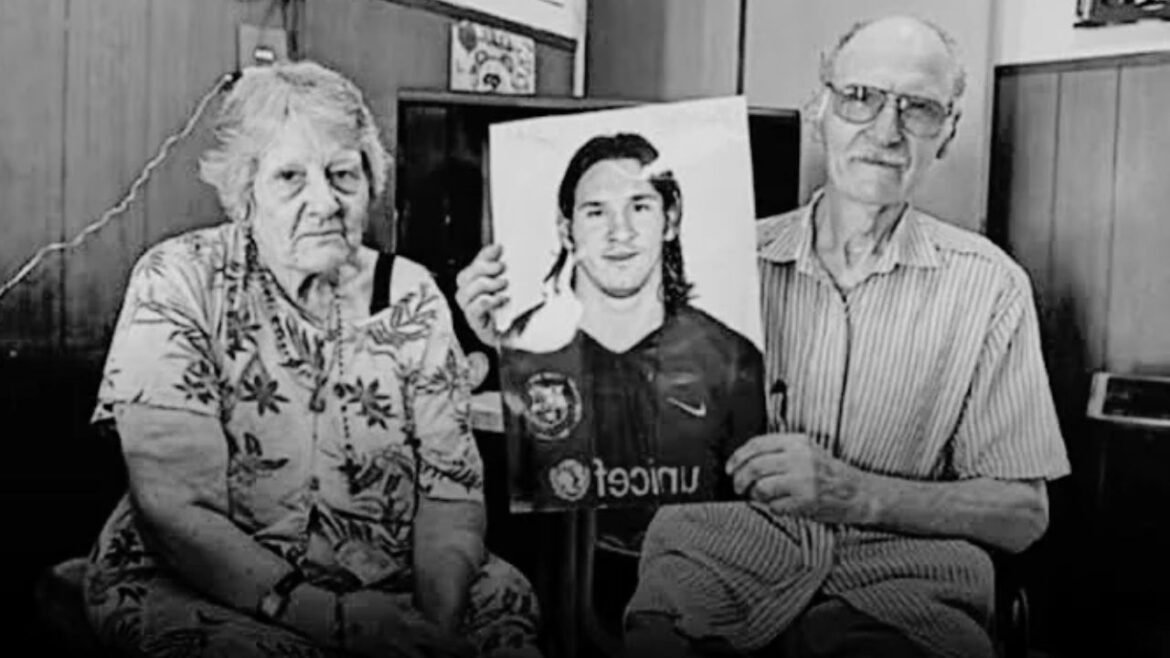
If you searched for Celia Oliveira Cuccittini expecting to find information about Lionel Messi’s mother, you are not alone. The name confusion is one of the most common mix-ups in Messi’s family history. But here is the straightforward answer: Celia Oliveira Cuccittini was Lionel Messi’s maternal grandmother, not his mother.
This article covers who she was, how she fits into Messi’s family, what role she reportedly played during his earliest football years, and why her memory has stayed with him long after her passing.
Who Celia Oliveira Cuccittini Was?
The name confusion starts with a simple family pattern. Messi‘s mother is Celia María Cuccittini. His maternal grandmother was Celia Oliveira Cuccittini. They share a first name and the same surname, which understandably causes mix-ups in search results and family-tree databases.
A quick generational map helps clear this up. Celia Oliveira Cuccittini sits two generations above Lionel Messi. His mother, Celia María Cuccittini, sits one generation above him. They are grandmother and granddaughter — two different people who happen to carry nearly the same name.
It is also worth noting that her name appears in different forms depending on the source. You may see Celia Olivera Cuccittini or Celia Ramona Olivera Moyano in various articles and genealogy records. These variations likely reflect differences in transliteration or inconsistent record-keeping rather than references to separate people.
Celia Oliveira Cuccittini was not a public figure in her own right. She was not an entertainer, an athlete, or a known professional. Most of what is written about her comes from retrospective accounts of Messi’s early childhood, included in broader biographies and profiles about his life.
Her Place in the Messi Family
Lionel Messi was born on June 24, 1987, and grew up in Rosario, Argentina. His family was close-knit and working-class. His father, Jorge Messi, worked at a steel factory. His mother, Celia María Cuccittini, was the heart of the household. He also has three siblings: Rodrigo, Matías, and María Sol.
Celia Oliveira Cuccittini was Celia María’s mother, which placed her firmly on the maternal side of the family tree. In Messi’s Rosario upbringing, extended family members were part of everyday life. Grandparents, aunts, uncles, and cousins were woven into the fabric of the neighborhood where he grew up.
For Messi as a child, his grandmother was not a distant figure. She was present, involved, and — based on consistently reported accounts — genuinely enthusiastic about his football from an early age.
It is important not to transfer biographical details about his mother onto his grandmother. For example, accounts describe Celia María working in domestic cleaning and at a magnet factory. Those details belong to the mother, not to Celia Oliveira Cuccittini, whose own occupation and personal history are not well-documented in public sources.
Her Support for Messi’s Early Football
The most widely reported aspect of Celia Oliveira Cuccittini’s story is her role as Messi’s first real champion on the sidelines. Multiple biographical sources describe her as a consistent presence at his early matches, cheering him on before he had any formal recognition as a talented player.
At that age, Messi’s size was a genuine obstacle. He was small for his age, and that made some coaches hesitant to let him compete alongside older boys. According to accounts repeated across several publications, Celia pushed back against that hesitation.
The Abanderado Grandoli Story
One account appears again and again in Messi’s origin stories. It involves his earliest club, Abanderado Grandoli, in Rosario. The story goes that a coach was reluctant to let the young Messi — still very small — play with older children during a match.
Celia reportedly stepped in and pressed the coach to give him a chance. Messi went on to score twice on his debut.
This story has been reported by multiple sources, including outlets covering Messi’s career milestones. It should be understood as a widely repeated family-origin account, not as documented match statistics from an official record. But the consistency with which it appears suggests it reflects something real about how Messi’s early opportunity came about.
Her role in that moment was not that of a coach or a football scout. She was a grandmother who believed in her grandson when the adults in charge were not yet convinced. That is a modest but meaningful distinction.
Her Death and Its Emotional Weight
Multiple sources report that Celia Oliveira Cuccittini died in 1998, at approximately 67 years of age. If those figures are accurate, she passed away when Messi was around 10 or 11 years old — well before his move to FC Barcelona and long before the world came to know his name.
That timing carries a particular sadness. She was the person who reportedly pushed for him to get his first chance on a football pitch. She did not live to see him become one of the most decorated footballers in history, win the Copa del Rey, the Champions League, or eventually lift the World Cup trophy with Argentina in 2022.
The absence of a close family member during a defining rise is something many people can relate to, and it helps explain why Messi has spoken about his grandmother with visible emotion in interviews over the years. The people who believed in you before you became anything tend to leave a lasting mark.
How Messi Has Honored Her Memory?
One of the clearest public signs of how much Celia meant to Messi is a tattoo. Messi has a tattoo of his grandmother on his left shoulder blade. It is one of his more personal pieces of body art, and its placement — on his back, less visible than some of his other tattoos — gives it a quiet, private quality.
The tattoo is a widely reported fact across multiple reputable publications. It reflects something consistent with how Messi has carried his roots throughout his career. Despite decades of global fame, interviews with him regularly circle back to family, to Rosario, and to the people who shaped him before the spotlight arrived.
For readers interested in exploring more profiles and background stories about figures connected to the sports and entertainment world, Open Business Point covers a wide range of topics in an accessible, factual format.
Why So Little Is Verified About Her Personal Life?
It is worth being honest about the limits of what is publicly known here. Celia Oliveira Cuccittini was never a celebrity in her own right. She did not give interviews. She did not appear in magazines or press coverage during her lifetime. The information that exists about her comes almost entirely from biographical pieces written about her famous grandson, years after she was gone.
Some online sources list a possible birth date for her — May 26, 1930 — but this detail is not strongly corroborated by more established publications and should be treated with caution rather than accepted as confirmed fact.
Her occupation, education, and the full details of her private life are simply not part of the public record. That is not unusual. Most grandparents of famous people never become public figures themselves. Their stories get passed on through family memory, the occasional interview, and — as in this case — a tattoo that says more than any biography could.
A Short Summary of What Is Known
- Who she was: Lionel Messi’s maternal grandmother, not his mother.
- Family connection: She was the mother of Celia María Cuccittini, Messi’s mother.
- Her role: An encouraging presence at Messi’s early matches in Rosario.
- The Grandoli story: She reportedly pushed for Messi to get a chance at Abanderado Grandoli, where he scored twice on debut.
- Her death: Reported to have died in 1998 at approximately age 67.
- Messi’s tribute: A tattoo of her on his left shoulder blade.
- Name confusion: Her name closely resembles that of Messi’s mother, Celia María Cuccittini.
Final Thoughts
Celia Oliveira Cuccittini did not coach Messi. She did not negotiate his first contract or design his training program. What she did — based on the accounts available — was show up, believe in him, and push for him to be seen when others were not ready to look.
That kind of quiet, early support does not always make headlines. But in Messi’s case, it left a mark visible enough to carry on his skin for the rest of his life. For someone who went on to become arguably the greatest footballer ever, the story of where it started — with a small boy, a reluctant coach, and a grandmother who said “give him a chance” — is worth knowing.
Read Also: